Category: Blog

  • The long journey of deleting my LinkedIn account

    The long journey of deleting my LinkedIn account

    For at least 20 years, I’ve had an account on LinkedIn. Thanks to the platform, I have met many interesting people, found business opportunities and learned a lot about career, entrepreneurship and business management in general. As a user, I connected with almost 2,000 people, posted articles, have initiated groups and paid for advertising to promote my business initiatives. LinkedIn has been a great online tool in augmenting my business life.

    Let’s connect

    In the early years, it became a sport for me to connect. I asked anyone I met to connect with me in LinkedIn, just to boost my number of connections. Attending networking events basically meant another opportunity to harvest new contacts. I do remember breaking through the magic ceiling of 500 connections. If I remember correctly, by doing so I unlocked some new featutes or functionalities. Whatever it was, it felt good. The fact that I hardly knew many of my online connections was irrelevant to me at the time.

    Later, I started receiving connection invitations from unknown people of whom I had absolutely no shared experience, knowledge, interests or connections with. I couldn’t figure out how these people found me and why there were interested in me. Were these just interested to get access to my network? Or was there something more sinister going on? At any rate, I decided that quality was better than quantity and only connected with people I had at least a proper conversation with. I continued to be an avid yet more conscious user.

    What is there to like?

    Online, social equity is often expressed in number of ‘likes’. I have always pondered over the question: “What does a ‘like’ on a social media post actually mean?”

    For me it differs wildly. I could like someone’s opinion, because I agree with it. However, I could also like someone’s opinion, not because I agree with him, but because I find it important that his viewpoint is heard. Especially in heavily entrenched polarized discussions, I celebrate perspectives that shift the focus, even if I disagree.

    Also, I could like a post because the person is very dear to me and know that self-expression is a big step for him or her. Do I agree with the post? Not necessarily. Or someone shares a business success. I can be happy for the individual, although I might also think the success or the organization behind it are quite destructive to mankind.

    Not feeling the need to express my rationale behind my likes, I continued liking posts on LinkedIn.

    Strictly business?

    Over the years I noticed a gradual change (evolution, or devolution if you will) in the content that passed my feed. In my experience, where LinkedIn started off as a website for strictly business networking, it became a forum that, at least in part, competed with the social media outlets of Facebook, Google, Twitter and others. Linkedin changed into a meeting place where users also shared their day-to-day non-business acitivities, personal development stories and content for (self-)promotion. Later, I believe since the paradigm shifting year of 2020, it also became a ground for political discourse, activism and virtue signaling.

    Growing concerns

    For business promotion, but also out of sheer curiosity, I had become a lot more knowledgable on a broad variety of digital topics: SEO, user analytics, tracking technology, dark patterns, online ad targeting, cross linking data pools, OSINT and many more fancy buzzwords. I realized how much power and control the people working for such platforms had.

    Whomever has such technology at his disposal can influence, steer and direct masses into doing whatever you want. To illustrate the dangers of this, especially in combination with AI, I wrote a political thriller in 2021 called “Nothing as it seems“. Parts of it eerily have already become reality today. The novelle is free to download.
    These concerns had already led to me stop using all Google and Meta products. These departures were far from easy. Therefore I continued using LinkedIn, albeit more and more concerned.

    Breaking the Link

    Besides moving away from business-only content, LinkedIn started doing something that worried me a lot. It suggested political figures for me to follow. I ignored it, but the suggestions were very persistent. It wasn’t shown as an advertisement, but likely was a feature that political parties paid for.

    Similar to my musings about ‘likes’, I wondered what it means to LinkedIn If I were to follow this politician? Will LinkedIn interpret this as an endorsement of an electoral party?

    Then someone reminded me that LinkedIn was owned by Microsoft. It all connected. On one hand is LinkedIn actively pushing political discourse on its platform and on the other hand is Microsoft is continuing to increase its digital surveillance capacity. This very dangerous combination is not a privacy breach; it is an intelligence operation.

    Furthermore, if you merge all this data with that of other Big Tech platforms, add AI bots and algorithms to the equation and an almost totalitarian digital power structure is created. This is not fanciful thinking, this is already a reality. Such concentrated power is extremely dangerous and should not be in the hands of any individual or any entity, whether it is Microsoft, any other (Big Tech) company, any government or any other organization.

    The exit process

    As with my departure from all Google and Meta services, I knew I had to leave LinkedIn as well. I expected it to be quite a sacrifice from a business, career and network perspective, but I also see myself as a pioneer. Fortunately, there is a possibility to ‘try it out’.

    LinkedIn actually kindly offers you to hibernate your account: you will no longer be able to use LinkedIn and no one will be able to find you there. It is like a complete removal, but with the option to come back, keeping all your connections and data.
    I hibernated my account for an entire year. In this period, I encountered several times when I (thought I) needed LinkedIn. Connecting with someone now means exchanging e-mail addresses instead of a LinkedIn Connection Invite. Did I miss business opportunities? Probably, but… what you don’t know you don’t miss.

    A year later, I reactivated my account, downloaded all my personal data (something you should do always do, even if you stay on social media platforms) and proceeded with the actual deletion of my account and data.
    Are there alternatives?

    Unfortunately, the only alternative that I have seen that comes close to LinkedIn is Xing (xing.com). It is popular in Germany. I do not have an account there and cannot say if it is a good replacement for LinkedIn. I do know that the company behind, New Work SE, also runs the Internations platform, a network hub for expats.

    Perhaps the better solution is to have a smaller circle of friends and acquintances and meet up with them regurlarly.

    Is this for you?

    Do I recommend doing the same? Ideally yes. But I fully understand that not everyone is willing to pay the price of not being LinkedIn connected online. There, I suggest to try it out. Hibernation is certainly a possibility, but it can also be as easy as deciding not to use the platform for a certain period. Can you do with less?

  • 10 books that moved me this year

    10 books that moved me this year

    This year, I read 55 books. Although I am not reading for the sake of numbers, this is most definitely a record for me. Some of these books deeply moved me and gave me new ideas and perspectives on live. I have compiled a list of 11 books which I recommend to any one, for different reasons. The book titles are listed in random order. Some of the books can be read and downloaded free of charge.

    1. Zen and the Art of Motorcycle Maintenance by Robert M. Pirsig

    This classic book, a fictionalized autobiography, describes the journey on a motorcycle of a father and his son. It takes a while before the story picks up, but then the history of both is slowly revealed. The book is full of philosophic contemplation, such as “What is the definition of quality?” and the difference between rhetoric and dialectic. It has a beautiful ending that literally moved me to tears.

    2. Ten Arguments For Deleting Your Social Media Accounts Right Now by Jaron Lanier

    Author Jaron Lanier does not have any social media account. That hasn’t impeded him at all, as he is one of the top 25 most influential people over the last 25 years of technological history. In his book he constructs ten very compelling and well supported arguments for removing yourself from social media. On top, he writes it in such a positive and uplifting manner that it is a joy to read.

    3. Common Sense by Thomas Paine

    With more and more totalitarian control being instigated by governments all over the world, Common Sense is a refreshing pamphlet written by Thomas Paine in the 18th century. In it, he advocates for independence from Great Britain. Written in a clear and persuasive way, Paine gives moral and political arguments to encourage people to fight for egalitarian government.

    4. One Red Paperclip by Kyle Macdonald

    I had heard the story, but never read the entire story. Kyle Macdonald started a barter experiment. He starts by a paperclip and finally ends up with an entire house. It is a lovely story, written in a light and honest way. Highly recommend for if you see more possibilities in life.

    5. Bezmenov World Thought Police 1986 by Tomas Schuman

    A candid account of the role that state media played in the KGB’s activities in the Soviet era. Far reaching tactics were used to change the perceived reality of the Soviet Union over an extended period of time. It contains very interesting ideas and concepts that we can find back in today’s world. When you demoralize a society, people will not know anymore what is right or wrong. Hence they become lethargic and subject to totalitarian control.

    6. How to Hack Like a Porn Star by Sparc Flow

    A fascinating technical story of a real hacker who takes the reader on a fictional journey of hacking a bank. A little bit of IT background will help in understanding the technicalities described in the book, but without one can still follow very well. It demonstrates the vulnerabilities in any complex system architecture. IT security should not be left to the experts alone.

    7. The Choice: Embrace the Possible by Edith Eger

    The author describes her heart breaking story from being deported to concentration camps in World War II, their liberation and subsequent escape to the United States. Edit Eger became a psychologist and draws wisdom from all her horrifying and her beautiful experiences in life. Deeply moving.

    8. TranscEnding the Global Power Game by Armin Risi

    A beautiful book which you can purchase directly from the author himself. It is a work that combines the spiritual, philosophy, esotericism, history of mankind, and proven conspiracies and projects it onto the current developments and near term future of this planet.

    9. Mutual Aid by Pyotr Kropotkin

    Highly thought provoking and fascinating book. Kropotkin reveres Darwin, but rightfully points out that life is more than the mutual struggle for survival. He gives a wealth of examples from the animal kingdom where mutual aid is the predominant drive. Then he investigates primitive tribes and subsequent civilizations and confirms that mutual aid is also prevalent there.

    The book triggered me in pondering over the mutual struggle that we experience today, which is mainly caused by a flawed money system which creates artificial scarcity.

    10. When Google Met WikiLeaks by Julian Assange

    A shocking book that exposes Google’s close ties with the U.S. government, including the NSA and the State Department. It discloses the lies told by its former CEO, Eric Schmidt and the tech company’s dystopian vision for a “new world order”.

  • Why I swim in ice cold water

    Why I swim in ice cold water

    We live in constant stress. Most of that stress is caused by the social construct that we live in. Mortgages, jobs, competition, policies, laws… They exist because we decided to organise the world in this way. If we were to organise it in a different way, these issues would cease to exist. So in a sense, these issues are artificial. If animals could talk, they’d probably agree. A bird in the sky sees no borders, sees no bank accounts, sees no interest rates. A bird can truly live in the presence.

    And that is why I like to experience of swimming in ice cold water. It offers me to possibility to travel away from this paradigm. It seems like a temporary escape, but I do come back differently afterwards.

    Mental hurdles

    Before taking the plunge, there are many mental hurdles to take. You know it is not going to be nice and a part of you is revolting. Your mind breaks down the entire effort into many smaller steps. Every step encompasses a decision. The decision to go for a swim, the decision to pack your gear, the decision to go to the water, the decision to get undressed, the decision to step to the edge.

    And the biggest one of all is to actually jump in the cold water. You know what is going to happen when you jump, and you know it is not going to be nice. You are actively choosing for discomfort, or flat out spoken, pain.

    This is the first benefit. Daring to choose for something that is uncomfortable. pushes your mental and physical limits. Not out of competition with others, just with yourself. This is a training that will pay itself back many times later.

    When you submerge yourself, many things happen. First of all, as you can imagine, you put your body under tremendous physical stress. Your system gets in a shock. It screams to get out.

    Calmness

    The key here is to remain calm. Pace your breathing, one breathe at a time, in and out. I imagine myself being a captain on a ship, my body. I am only the captain, I am not the ship. I hear and feel the hull is suffering, but I also know the ship is very well capable of coping with these extreme conditions. My mind is safe in the boat cockpit.

    Let your body do what it knows what to do: adjust. It takes around a minute before you notice. Your body is protecting the most vital organs which resides in your core. It therefore circulates less blood to the auxiliary organs. You start noticing that your body can handle these conditions a bit better.

    Some people like to bathe, I prefer to swim. At a certain point I decide to return. When I turn around, I see the distance back to the shore. Somehow it is always much more than I thought it would be.

    And this is where your personal leadership is trained. You are under extreme pressures, but you also realise it is of utmost important to remain calm. Panic is not an option. The only way out is to swim back, stroke by stroke, meter by meter. What keeps me going is the thought of being on the shore again.

    As I focus on the next meter ahead of me, I have no time to think of anything. My pressing appointments, the depressive state of the world or the cashier that was not nice to me, they have all become irrelevant. What a bliss.

    Euphoria

    As I reach the shore, I climb out of the water. I feel a sense of euphoria, but I do not let myself indulge in it. It could lead me into taking unnecessary risks. I know it is important to dry yourself as soon as possible and immediately get warmly dressed. Your body will notice that the dangerous conditions have disappeared and your systems starts opening up again. It circulating the warm blood away from your core to your limbs. This can result in the after drop: your core temperature going down.

    As I warm up, all the challenges of the rest of the day don’t seem so heavy any more. The body can handle it, I just need to remain calm.

    Please note: if you feel inspired to do swim in cold water, please prepare carefully. Read thoroughly the information you can find on the internet and ask for experiences, advice and assistance from others.

    1
  • Toward a new paradigm

    Toward a new paradigm

    Sometimes, when I see a large group of people together, a wave of emotions washes over me. I feel very sad and desperate. I have no rational explanation for it, but the corresponding thought is “They don’t see it”. It is a very deeply rooted sadness. Although it does reside within me, but it is not me. It is sourced from somewhere else.

    I never dared to share this with others, as this is not socially accepted in the world we live in. Furthermore, I did not understand the emotion. I did not know what it was that “they” did not see; I certainly did not see it either. Hence, I repressed this feeling. Thanks to a strong intellect, I was able to adjust myself fairly well in society for the first three decades of my life.

    But life taught me that things are not always as they seem. I started a quest to bring me closer in line with that which houses in me. Bit by bit, step by step, I slowly began to intellectually understand what we, me included, did not see.

    The issues in the world are merely symptoms of the real issue: the current paradigm. No solution, how inventive it may be, will suffice to solve the challenges. However, when we embark on a mission to discover the fundamental mysteries of life: who we are, where we come from and why we are here, we can actively build and grow towards a new paradigm.

    We can already start today. Each individual can start with their own inner revolution towards sovereignty. If you want to start that journey and build a radically better future, I invite you to read my book Path to Sovereignty.

  • Beyond the limitations of beliefs

    Beyond the limitations of beliefs

    To me, the societal division that was triggered by the pandemic, is nothing more than a clash of beliefs. Positions have been taken and open debate and conversation seems no longer possible. The ever increasing censorship works only as a catalyst for further divide and fear.

    History has shown the great dangers in blindly following one belief or the other.

    Is there another way to approach this? Can there be a way where it is unnecessary to choose a side? Can both sides can be right AND be wrong? Can they both be relevant and irrelevant? That would require a new paradigm of thinking. Jiddu Krishnamurti spoke about this belief dynamic.

    “To be a theist or an atheist, to me, are both absurd. If you knew what truth is, what God is, you would neither be a theist nor an atheist, because in that awareness belief is unnecessary. It is the man who is not aware, who only hopes and supposes, that looks to belief or to disbelief, to support him, and to lead him to act in a particular way.

    Now, if you approach it quite differently, you will find out for yourselves, as individuals, something real which is beyond all the limitations of beliefs, beyond the illusion of words. But that—the discovery of truth, or God—demands great intelligence, which is not assertion of belief or disbelief, but the recognition of the hindrances created by lack of intelligence. So to discover God or truth—and I say such a thing does exist, I have realized it—to recognize that, to realize that, mind must be free of all the hindrances which have been created throughout the ages, based on self-protection and security. You cannot be free of security by merely saying that you are free. To penetrate the walls of these hindrances, you need to have a great deal of intelligence, not mere intellect. Intelligence, to me, is mind and heart in full harmony; and then you will find out for yourself, without asking anyone, what that reality is.”

    from The Book of Life by J. Krishnamurti

    What do you think?

  • How I got rid of Google, in 17 difficult steps

    How I got rid of Google, in 17 difficult steps

    To start, I always venerated Google for enabling access to all kinds of information to all people in the world. Thanks to Google, we could learn, self-express and communicate with others anywhere on this planet. These three pillars were key to its immense success.

    Since a few years, Google started conducting business in a way contrary to these pillars. Its excessive censorship violates the ability to learn, to self-express and to communicate. Together with its massive (meta)data collection and outright abuse of power, Google has become a very dangerous conglomerate with more centralized power than any nation in the world. I, personally and business-wise, could no longer justify using any of its services. I started the long and arduous journey of finding and creating solutions for all the Google services that I was using. For certain things in life, I want to live by principle, not by concession or comfort. Freedom of Speech is one of them.

    Moving away from Google is a LOT of work. It is already a lot of work simply in understanding the dangers, especially in an age of censorship. It is also very confusing. There is little joy or reward. You also risk jeopardizing your business and friendships. Furthermore, is this even the best route to take?

    Nevertheless I hope that it gives a perspective of the large dependencies we have in the digital world. The power consolidation has led to digital dictatorship where just a handful of people can directly influence and directly control the behavior of every individual. Those otherwise meaningless virtual ones and zeroes determine and direct your life in this physical world.

    Disclaimer: technology changes fast. Some of the suggestions below will become obsolete over time. Also, some alternatives might carry some privacy risks as well. I have kept the technicalities to a minimum. Furthermore, there are many more actions one can take to increase privacy, like using a VPN service or the Tor browser. The below steps are primarily focused on no longer using Google products. I suggest to always do your own research first (and use an appropriate search engine for that) before implementing any of these steps.

    It is a long process that can take weeks or months to implement. Many of the Google services are collaboration tools. That means that if you move away from Google, you impact the way you work with others. This might stir a hefty discussion which will take time and energy.

    The first steps are only concerned with actions to take on your desktop or laptop computer. The last steps, far more complicated, focuses on the actions for your Android mobile devices. This article does not cover any of the other Google products, such as the Nest product line.

    1. Sign out

    A first important step is to sign out of every Google service that you use. You will have to log in every time you need to use its services. Annoying, but you will become aware to which extent you are dependent.

    2. Choose the right browser

    Blocking third party cookies no longer protects you from being tracked. Browser fingerprinting has become the norm. By combining browser, browser version, operation system, operation system version, screen size, plugins installed and many more, a fairly unique identifier of you can be created. With that, it no longer matters if you accept cookies or are logged in to Google. Use a separate dedicated browser for all your Google services and only for your Google services. With the other browser(s) you can surf the net as you are used to. With Google’s latest efforts to track people’s behavior on the internet (FLoC), it is advisable not to use Chrome.

    3. Google Search

    Google’s powerful search engine is set as default in many browsers, tablets and mobile phones. It takes some tweaking in the settings to change this. Currently I am using qwant.com and duckduckgo.com. Their search results have nowadays improved so much and can easily replace Google Search.

    4. Gmail

    There are many alternatives to Google Mail (Gmail), free and paid. With paid email solution, you have more control in general. A first action is to automatically forward new incoming emails from Gmail to your new email address. The next step is to inform all your contacts and update every newsletter, subscription and account with your new address. This is a long process and takes a lot of time. Patience is key.

    You could setup an automatic reply in Gmail to inform the sender of your new email address. Instead, I used the opportunity to manually remove myself from accounts and mailing lists that I was no longer interested in.

    In the meantime, you can download all your Gmail emails and import them into your new email account. At this point, you cannot yet delete your Gmail account as it is required for many of the other Google services.

    5. Google Calendar

    If you use Gmail, you probably also use Google Calendar. There are many alternatives available, online and offline. Finding the right alternative for you depends on many factors. I would recommend to look for one with ICS compatibility, so you can import your existing Google Calendar entries.

    6. YouTube

    Now that you signed out and use a new and fresh dedicated Google browser, you will probably see different video suggestions than you are used to. However, there are better alternatives.

    There are many alternative video platforms. I found Odysee.com a promising potential replacement for YouTube. Many youtubers have moved there because Google closed their accounts or deleted their content. If you are a content creator yourself, you will unfortunately have to miss the advanced functionalities of Youtube Creator and Youtube Studio.

    If you still require to use YouTube to watch a video, a good option is to use a YouTube client. This is an application that shows all YouTube videos, but does not link it to your identity. Many of them remove the advertisements as well. I use FreeTube. If someone sends me a YouTube link, I copy/paste the title in FreeTube and watch it there.

    7. Google Maps

    A great alternative to Google Maps is OpenStreetMap, which has even more details.

    For route planning and navigation, many other options exist. It is always worth investigating who is behind such service. For instance, the popular navigation app Waze, it is owned by Google.

    8. Google Drive

    Just like your email in your Gmail inbox, Google monitors the files you store in Google Drive. There are plenty alternatives. Before signing up to any service, make sure to find out if your content is being scanned.

    9. Google Meet

    Many alternatives are around, both free and paid. The Open Source project Jitsi offers a free alternative to Google Meet. For those owning servers, it offers the installation guide to install it on your own digital premises. It encourages to install the

    10. Google Analytics

    Any website owner wants to have metrics on website traffic. Google Analytics (GA) gives a very powerful tool to get insights in who is visiting your website. Since many websites use GA, Google is able to trace the entire journey of the internet user.

    Several paid alternatives exist. For WordPress websites, I recommend Matomo, a free open-source alternative that respects user-privacy.

    11. Google SEO tools

    SEO tools such as Page Speed Insights and Google Search Central help to optimize the findability of your website.

    12. Google Adwords

    I have used Google Adwords in the past. I do not have any current knowledge of it. There are other suppliers of paid advertisements but the question remains to how much data collection is collected and for what purposes.

    13. Google Adsense

    I have used Google Adwords in the past. I do not have any current knowledge of it. If anyone knows of valid alternatives, please share so in the comments.

    14. Find alternatives

    I have listed a few of the solutions that I have found. But my situation is as unique as yours, so it is important to do your own research when deciding to switch. Here are several very useful websites that contain good alternatives for Google and other Big Tech software. As developments in technology go very fast, make sure to check all these sites. When choosing an alternative, also think of inter-compatibility, the learning curve, the migration process.

    switching.software
    privacytools.io
    prism-break.org
    Awesome Humane Tech
    Opensource.Builders

    Your mobile device

    So far, most of the steps are simply a matter of finding a replacement and switch over. They can still require a lot of time and not every alternative offers 100% of the sought functionality, but the process itself is comprehensible. It becomes far more complicated when you also use Android mobile devices. It also requires a lot more technical knowledge to remove the Google services from your device and is sometimes not even possible.

    A new Android device asks you to login with a Google account before you can use your phone. If you do so, your phone number, the IMEI number, the MAC address will all be linked your account. Google can track your location even if you have disabled location services and the airplane modus switched on. Fortunately, you can also opt out on linking your account to your device.

    15. Leave your phone at home

    This step does not require any technical skill and it is a very effective action. At the same time, for some, it is one of the most difficult steps in this list. Challenge yourself every time you go outside: do I really need the phone? By leaving the phone at home, you are not feeding its algorithms. By being without a phone, you are not informing people you do not know, who work for companies you don’t know, where you are and what you are doing.

    The first times you leave your phone at home, you will immediately notice what addictive habit you have built over the years. You also stimulate your thinking and memory skills again.

    16. Google Playstore

    There are alternatives to the Google Playstore. F-Droid is a repository of open source apps. Aurora is a front-end to Google Playstore where you can login anonymously.

    17. Other steps to consider

    You could go to the settings and Force Stop all the Google applications (GAPPS). This might cause your phone to complain as for certain operations. Another option is to degoogle your phone. This is a risky and technical exercise that should either done with utmost care or by someone who understands what to do.

    Final thoughts

    In 2020, I had already removed my Facebook, Instagram and Whatsapp accounts. In comparison with the above, that was easy for me. If you embark on this journey or even implement a few of the steps, I wish you best of luck. I also thank you deeply for doing so.

    I have experienced how dependent I was on one single company. A wise strategy to follow, both personally and business wise, is to reduce your dependency. You will have slightly more overhead, but the big benefit is that you are less vulnerable to the dictations of a single supplier.

    Photo by Trinity Kubassek from Pexels

  • Poem: Dear Child

    Poem: Dear Child

    poem dear child

    Dear Child

    I am very sorry
    We told you not to worry

    It has been now an entire year
    That we adults live in constant fear

    You wisely ask what is so bad about dying
    That we delude ourselves by its denying

    You ask if we prefer not to live life at all
    Incarcerated by the fright that did us befall

    Polarized, we are in such devious strife
    We can’t possibly live a sustainable life

    Please show to us, adult women and men
    How it is to behave responsibly again

    That we should really listen and care
    About others and the ideas they share

    Dear child, it is now upon you that I call
    Please take over the control

    Let your divine and youthful light
    Guide us out this dark night

    So we leave this history behind
    Compassion and empathy in our mind

    Entering what we always dreamt of
    A world of love.

    February 2021
    Poem inspired by questions of my children about the Covid-19 world event

  • Now that I am 100% Facebook free

    Now that I am 100% Facebook free

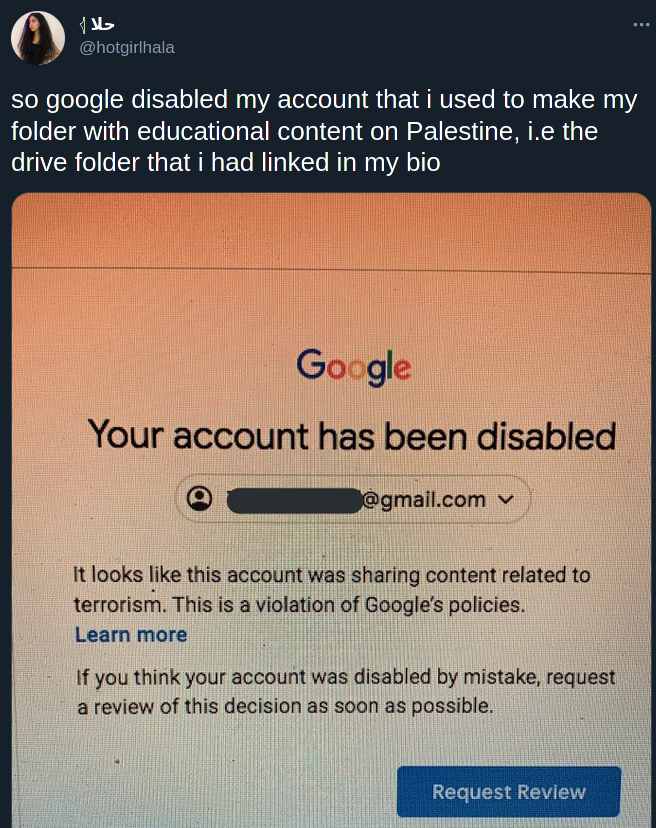
    Since September 2020 I am now 100% Facebook free. Am I really? No. Upon removing my account, Facebook informed me it will keep my data, just for the possibility of a need for criminal investigation. So, the way I read this, in theory it could continue to aggregate (meta)data about me.

    What has changed for me personally? Somehow a lot and at the same time not so much.

    I experienced an initial, short lived, ego boost: “I am doing something what I believe in”. Also, it opened up a dialogue with friends who had been contemplating doing the same. A friend recommended the documentary “The Social Dilemma”. It explains how these platforms know much more about you than you do yourself. I highly recommend watching it.

    You only become fully aware of something if it is no longer there. I discovered I spent way too much time numbing my mind by scrolling through Facebook and Instagram posts. I now try to spend that time in the archaic way of information consumption: reading books. It however does not give me the instant dopamine shot that social media platforms give, and I do miss that.

    Social consequences

    There are social and practical consequences. Firstly, by not being on WhatsApp, others could think of you as socially awkward, or a difficult person. Secondly, you are left out of direct and group conversations. You are dependent on the kindness of others to convey the essential information to you via other means.

    I did announce on all three Facebook application that I would be deleting my accounts. I was not trying to convince others to do the same. I also did not offer a better alternative, except for WhatsApp.

    I have replaced WhatsApp with Signal.org. It offers the exact same functionality, it is open source and offers far more privacy. It is just another app, it is free and you do not even need to remove WhatsApp. The only problem, few people use it. Some friends installed it especially for me, which truly humbles me. Others do not want to install yet another app, which I do understand. What matters for me is to demonstrate that leaving Facebook is an option if you truly disagree with its privacy breaches and censorship.

    There is a surprising upside. Initially, you feel bad because you are being left out of updates from your network. Over a relative short time, you no longer know you are being left out. The bad feeling has disappeared.

    Practical consequences

    There a numerous practical consequences. Some organizations, my energy supplier for example, are only contactable via WhatsApp. I am quite handy with search engines, so after some effort, I usually do find a phone number to contact them.

    There are some courses (free and paid) on the internet that are only accessible if you sign up with your Facebook account. Only option that you have left is to contact the organizer and see if there are alternatives to sign up.

    So far for me there has not been many practical consequences. Even before I deleted my accounts, I used the above workarounds.

    Career consequences

    This is for me the biggest concern. I have given up employment a long time ago (I founded a website “Quit Your Job“), but I will try to put myself in the shoes of an employee. After that, I will give my perspective as a business owner.

    If your job requires you to communicate via WhatsApp, you can only try to convince your coworkers that there are “better” options out there. I put the quotes, because “better” is always an opinion and you might be drawn into an unwanted technical analysis of applications.

    Some companies also demand personnel to like and share posts of the company. You can no longer can do that, for better or for worse.

    There are some consequences if you work specifically in (internet) marketing. These apply also for business owners.

    Consequences for business owners

    What does this mean for small business owners? Can you ‘afford’ to remove yourself from Facebook, WhatsApp and Instagram? With my actions, I have closed off several easy ways to attract new customers. I no longer have an audience. I no longer have a platform where I can promote my goods and services. I no longer have access to the tools to learn more about my target market.

    Also, I am more difficult to be found and contacted. What impression does it give to potential customers if the ‘usual’ ways are not available? I believe the only way to counter that is to explain on your website and (non Facebook) social media platforms WHY your company is no longer supporting Facebook. It demonstrates certain values of the company and that could be a good thing.

    There are alternatives for companies. I am experimenting with these. At the moment, I cannot yet say which ones I would recommend. Furthermore, I can already say that the alternative solution differs from company to company. Also, alternatives might, over time, create the exact same issues that I have now with Facebook. I will share my findings in a future post about a conscious digital strategies for companies.

  • How to find your own truth in this confusion

    How to find your own truth in this confusion

    The world has become even more fascinating place this year. We are in the midst of a global religious war. The stakes have never been so high. We are not combating each other for gain of territory or resources. We fight each other about a concept so vague, we do not even have a clear definition of it. But the fight is on nevertheless. This concept is called The Truth. And it is my truth against your truth… and it is getting pretty ugly.

    When war is declared, truth is the first casualty

    Arthur Ponsonby

    “Do your own research”

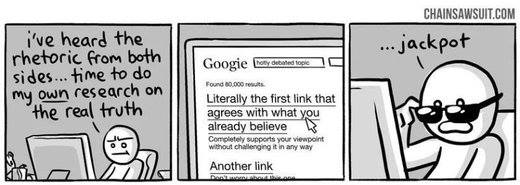
    If you feel you can no longer trust what you are being told, you have to find a new source of truth. These days, with lockdowns in place, finding new truth has never been easier. From your arm chair, you simply type a few keywords in your favorite search engine and the results start rolling in.

    The problem is that the most popular search engines have built a thorough personal profile of you. It already knows what you are thinking. It already knows your values. It already knows your interests. And, it knows more about your weak spots than you do.

    The search results that you get are not the same as what your neighbor will receive. For these search engines, we are all living in our own information bubble. It feeds us with links we will most likely click on. You find what you subconsciously already wanted to have confirmed. And by doing so, you reinforce your own bubble even more. People feel thoroughly protected and are ready to evangelize the unconverted.

    The evidence for this is found on every social media platform. Fierce debates take place. Facts are being fired as ammunition in order to stifle the opposition. Unfortunately, the other side strikes back with facts as well.

    Politicians, medical experts, leaders and scientists are found on either side, well dug-in to defend their position. Where does that leave you, other than being forced to pick a side?

    A way forward

    I am no exception to the rule. I am prone to the same things. The world is a very confusing place and I do not always have the time and energy to look further into the details. Moreover, I sometimes simply lack the motivation and interest to properly investigate certain matters. That said, when my core values are being triggered, I jump up immediately. I begin my internet research.

    I have to admit that the meaning of the term research has eroded significantly since my graduation. Many times, I actually do not do any actual research, but instead learn about the opinions of researchers. And in a recursive cycle, sometimes these researches are simply airing the opinions of other researchers.

    Being aware of that, I try to force myself to the follow a number of steps and principles to come to a better understanding.

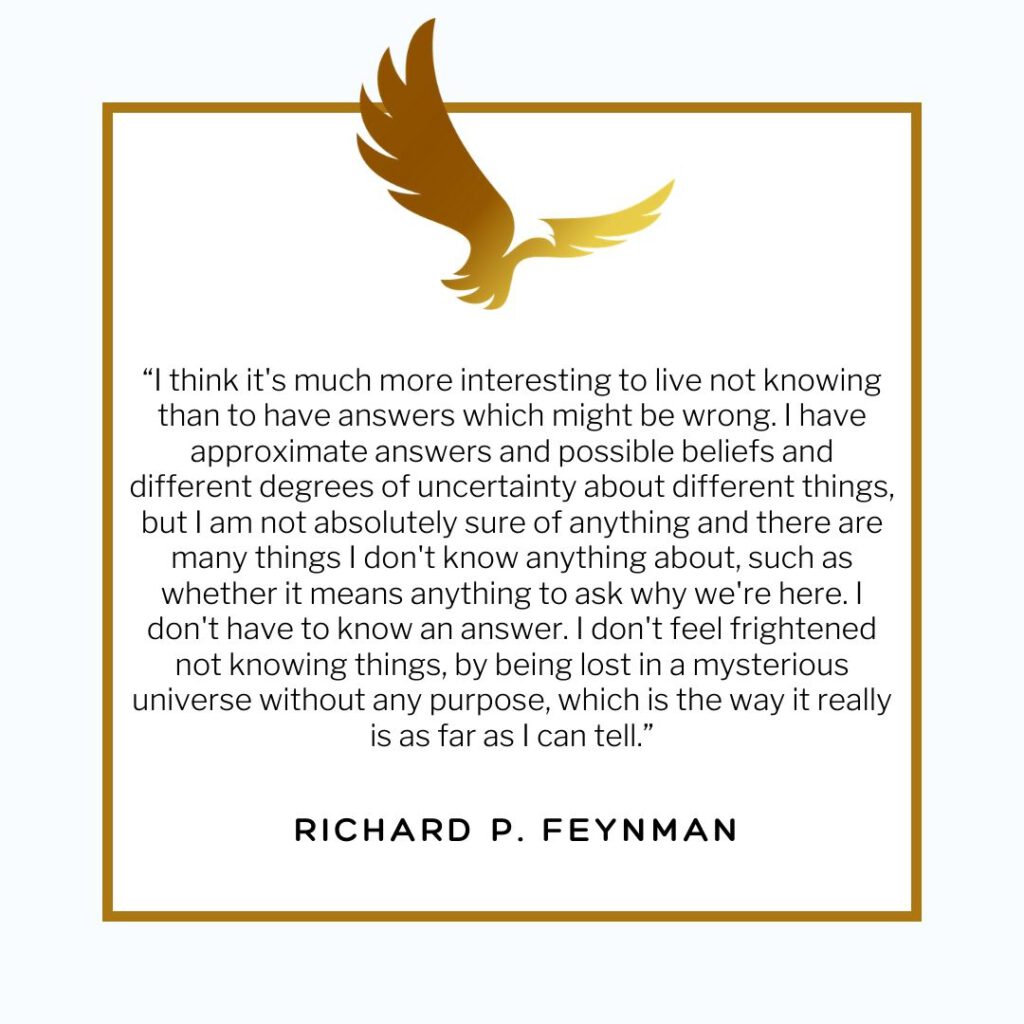
    It was never my intention to create a plan for myself for this. It is actually only in this year that I became consciously aware of how I over the years have come to my versions of truth. It is an elaborate process, but it rewards me with the richness of differing perspectives. Simultaneously, it impoverishes me with the lack of being absolutely confident that something is 100% true. In the current social polarization, that place is very lonely to be.

    I am sharing my guidelines to have a dialogue with you as a reader. Not on the hot topics of today, but more on the process. Is there a way or method to, at least for yourself, come to a fair and valid conclusion?

    Guidelines

    1. Get out of the spiral of negativity

    Before starting any research, it is important that you feel good and start with a happy clear mind. Especially during this crisis, it is easy to fall into negativity and generate depressive feelings and thoughts. Whether you think it is fully justified to have these feelings considering the situation, is irrelevant.

    Have a good night’s rest. Practice sports. Go running. Personally, I prefer to swim in cold open water. During and after, my body is mainly concerned with managing my temperature. Once achieved, I feel fully refreshed and happy.

    2. Acknowledge your bias

    Human are wonderful and powerful beings. But we also have our weak spots. We are prejudiced, even if we tell ourselves we are not. That is fine. It is important that you are aware of your own bias.

    Far more important is your thorough understanding that there is a high chance that your internet research is covertly restricted to your own biases. Advanced algorithms predict what you are most likely to click on, and will feed you with that information. And, your ego wants to see information that confirms it bias.

    3. It is okay to change position (even multiple times)

    To acknowledge your bias is already a victory over the Self. Changing position is even a greater accomplishment.

    Unfortunately, politicians have all too often misused this by covering up for willfully not being truthful. As long as your starting point was based on your truth, and your new position is based on your new truth, then you can reposition with honor, not with shame.

    4. Explain only to yourself

    And that brings us directly to the next point: you do not have to qualify anything to anyone, except yourself. Everyone lives in their own truth, and similar to religions, your truth is as just as superior as theirs.

    5. Triangulate

    It Is the Mark of an Educated Mind to Entertain a Thought Without Accepting it

    Great quote, not from Aristotle! (source)

    Investor Ray Dalio uses triangulation to make decisions not only for his business, but also for his health. Thanks to this strategy, he avoided risky life altering surgeries and was able to continue happily ever after. His story is an inspiring read.

    You can use triangulation. Find opposite views to your bias and carefully listen to the questions and critical views. Then find how proponents of your bias answer or rebut them. This way, you establish some sort of dialogue between two opposing opinions.

    It is important to find believable people with whom you disagree. These could be experts in the field, but could also include friends or family who you can fully trust and still disagree with. How did they come to their opinion?

    6. Follow your gut instinct

    I find this the most difficult of all. First of all since this is a intrinsic feeling, it is hard to rationally explain it to yourself, let alone others.

    Secondly, it is not always discernible what you feel. In stressful times, you might mistake your inner fears as your gut feel. I always question my feelings if they are not covert weaknesses.

    There is a lot more to say about this, but that goes beyond the scope of this article. I have written more about this in my article Living in two worlds.

    Step 7. Phenomenology

    Try to pronounce this word! Phenomenology is is the philosophical study of the structures of experience and consciousness.

    It is used in product marketing research to validate or discover actual behavior of consumers. In a consumer panel, when people are asked how they use a product, they will often subconsciously answer what the researchers want to hear.

    By applying phenomenology, a researcher observes the behavior of the consumer by living with that family for a certain period, leading to refreshing insights in the actual perception and usage of the product.

    In your internet research, also look for the personal stories and anecdotes that people tell. You can find those on forums and in the comment sections.

    Step 8. Ponerology

    I believe we all have a dark side in us. The famous Stanford Prison Experiment showed how that could get activated when we are put in position of power. Furthermore, a small percentage of people has psychopathic tendencies. The higher up the echelons of society, the larger percentage of psychopaths can be found.

    The Theranos story is a fascinating example. The two founders committed massive fraud with a proposition that was too good to be true. It shows how honest, intelligent and hard working people get pulled into the false narrative and are duped into perpetuating the lies.

    I think we should be aware that evil exists. Ponerology is the study of evil. Pathological liars do exist and their intentions differ greatly from the majority of the people.

    When finding your truth, carefully discern who is providing you with the information. Has this person or organization been caught with illegitimate practices before? No fool proof way exist for detecting of evil, but it already greatly helps to be aware of its existence.

    9. Tech savvy

    The algorithms behind internet searches are firstly intended to increase advertisement income for the media platforms. It comes at a hidden cost to the user, whose data and meta data is being sold to advertisers.

    There are many (technological) solutions to better protect one’s privacy online. It ranges from simply installing a browser plugin to going at lengths in spoofing your identity.

    Nowadays, governments and commercial organizations can also pay the media platforms to make sure certain data is promoted or completely restricted. You will for sure miss out on that information.

    You can however still be informed that information was being removed. For instance, many YouTube content creators have come forward this year by saying their video was removed, because they gave their opinion on a certain topic. At least you can infer that there is controversy on this item.

    Conclusion

    The list above is definitely not complete, but I hope you find it of some use. Please let me know your thoughts.

    As said before, it does not help to get 100% clarity. It does to understand the complexity of this world much better. And by doing so, we depolarize society. I believe that is better to cope with the world’s challenges. But, in the end, that is just my opinion…

    Photo by pawel szvmanski on Unsplash
    Photo by Sharon McCutcheon on Unsplash
    Photo by Justus Menke on Unsplash

  • What does digital sovereignty mean to you?

    What does digital sovereignty mean to you?

    A few months ago, in one swoop I deleted my Facebook, WhatsApp and Instagram accounts. The Facebook application suit has brought me a lot. As a user I found new friends, knowledge, insights and as a customer, it generated business for me. For that, I am grateful to Facebook the company.

    Over the years, I grew concerns over its abuse of power. However, in a way, that is inherent to large organizations and therefore perhaps even unavoidable. 

    I have always been wary of privacy. In my view, I took more protective measures than the vast majority of users and that somehow alleviated my concerns. It was only after learning the deeper intricate technical workings of the applications that I realized there was very little I could do to protect my privacy.

    And then this year, Facebook, as many other tech giants, significantly increased their censorship. This was for me the reason to remove myself completely. I could no longer justify it to myself: by using these applications, I am also condoning its censorship practices. 

    I am a strong advocate of free speech, no matter how ridiculous people’s opinions may sound. Especially in times like these, different perspectives need to be heard, if it were only to rationally and empathically understand WHY people agree or disagree with certain measures. Censorship, by removing voices and pushing only one narrative, is very dangerous in many, many ways.

    I know that other platforms, YouTube (Google), Twitter and even LinkedIn are censoring to various degrees. I am currently in the rather painful process of deciding what to do with these. It has large consequences for me both personally and business wise, some even unknown. It is a price I am willing to pay for my digital sovereignty. 

    In a short time, I have learned a lot. I am more than happy to share my experiences, views, mistakes, and alternative solutions, especially for businesses. If interested, please let me know.